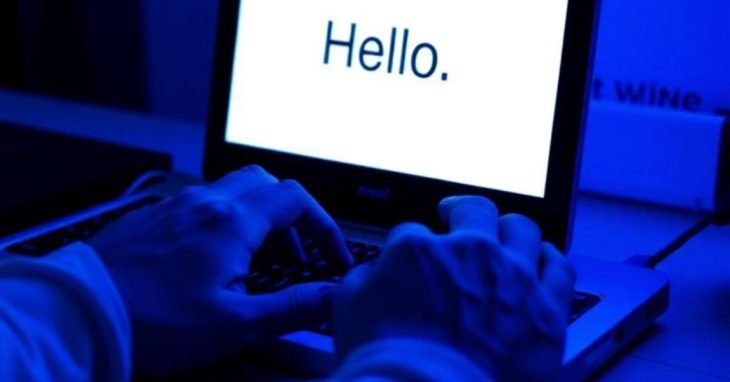
The email landed in my inbox on an ordinary afternoon. It came from Google. The subject line concerned upcoming changes to its advertising platform, Google Ads, scheduled to take effect on July 1. Nothing unusual there. Technology companies send operational updates every day. What caught my attention was the greeting.
“Hello.” Not “Hello Henry.” Not even “Hi Henry.” Just a plain, unremarkable, almost old-fashioned hello. For a moment, I stared at it longer than I should have. This was Google. A company that can predict what I am likely to search for before I finish typing. A company whose recommendation engines shape billions of digital experiences every day. A company that probably knows which devices I use, which videos I watch, which routes I drive, and how long I spend interacting with countless digital services.
Yet when it came time to communicate with me directly, the greeting could have been sent to anyone. That simple word triggered a much larger question. Have we overestimated the power of automation? Or are we witnessing something more interesting: the automation paradox?
For years, the technology industry has sold a compelling vision of the future. The promise was simple. More data would create deeper understanding. Deeper understanding would create better personalisation. Better personalisation would produce richer customer experiences.
The formula sounded irresistible. Every click mattered. Every location ping mattered. Every search mattered. Every interaction became another signal feeding an ever-growing machine designed to understand us better than we understood ourselves. Yet somewhere along the way, something unexpected happened.
Many consumers now live inside the most data-rich environment in human history. At the same time, they increasingly describe digital experiences as generic, repetitive, and oddly disconnected from their actual needs. This is the automation paradox. The more sophisticated the technology becomes, the more impersonal many interactions seem to feel.
Walk into a local café and the owner remembers your usual order after a few visits. Open a modern app and you may receive twenty automated messages that know your purchase history but somehow miss the reason you showed up in the first place. Technology excels at remembering facts. Humans excel at understanding context.
The gap between those two realities may be wider than the industry wants to admit. For years, marketers treated personalisation as a technical achievement. If a system could insert your first name into an email, that was considered progress. But was it? Most people understand how databases work. Seeing your name in a subject line rarely creates surprise anymore. It often feels like the digital equivalent of a name tag at a conference. The interaction appears personal without necessarily being personal.
Real understanding operates at a different level. It knows why someone is frustrated. It understands timing. It recognises intent. It adapts to circumstances. It appreciates nuance. A travel enthusiast browsing safari destinations is not merely a data point. A small business owner exploring advertising options is not simply a customer segment. People carry motivations, ambitions, anxieties, and constraints that no database field can easily capture.
The industry often mistakes identification for understanding. That distinction sits at the heart of the automation paradox. Companies with the most advanced technology may understand this better than anyone else. Google’s generic greeting may not represent a technological limitation. It may represent a deliberate decision. The company certainly knows how to personalise an email. Even a small online store can accomplish that today.
The question is whether personalising that greeting would meaningfully improve the experience. Perhaps Google tested both approaches across millions of users and discovered little difference. Perhaps privacy expectations have changed. Perhaps a generic greeting reduces the risk of awkward mistakes involving shared accounts, business accounts, missing profile information, or language inconsistencies. Or perhaps the company has learned something profound – knowing a person’s name does not automatically create a better interaction.
That lesson arrives at a fascinating moment in technology. Artificial intelligence has reignited the automation race. Software vendors now promise hyper-personalisation, autonomous workflows, predictive customer journeys, intelligent recommendations, and self-optimising experiences. The language sounds familiar because we have heard variations of it before. Only the scale has changed.
Today’s systems can generate emails, write advertisements, answer questions, create images, and build entire marketing campaigns with minimal human involvement. The demonstrations are impressive. The economics are compelling. The excitement is understandable. Yet beneath the enthusiasm lies a question few technology companies seem eager to answer. What happens when everyone automates everything?
The answer may already be visible. Inboxes overflow with automated messages. Social feeds fill with machine-generated content. Recommendation engines compete for attention. Notifications arrive in endless waves. The volume increases while relevance often struggles to keep pace. As automation becomes cheaper, abundance replaces scarcity. When every company can generate personalised content at scale, personalisation itself loses some of its power.
A handwritten note once felt special because it required effort. A customised email generated in milliseconds carries a different emotional weight. Humans are remarkably good at detecting intention. We instinctively distinguish between something created for us and something created for millions of people who happen to resemble us.
This creates another layer of the automation paradox. The easier personalisation becomes, the less valuable superficial personalisation may appear. The future therefore may not belong to companies that automate the most. It may belong to companies that know when not to automate.
That sounds counterintuitive in an industry obsessed with efficiency. Yet the strongest brands often understand that not every interaction should be optimised for scale. Some moments require context. Some require judgment. Some require restraint. And some require a human being.
The next chapter of technology will likely produce systems that become increasingly capable of predicting behaviour, generating content, and automating decisions. Those capabilities will undoubtedly transform industries. But technology leaders should remember a lesson hidden inside that simple greeting sitting quietly in my inbox. The challenge is no longer collecting data. The challenge is turning data into understanding. Those are not the same thing.
The “Hello” in Google’s email may not be evidence that personalisation technology has failed. It may be evidence that the companies building the future have realised something the rest of us are only beginning to understand: Knowing a customer’s name is not the same thing as knowing the customer. And that may be the most important lesson hidden inside automation.