
The world’s ear is shifting, and data shows us where it is turning. Streaming platforms no longer mirror tastes; they create them. Music trends once confined to Lagos clubs or Nairobi estates now fuel global playlists. Genres like Afrobeats, Amapiano, and Arbantone are no longer side notes. They are economic signals, cultural forces, and strategic tools for anyone shaping the future of sound.
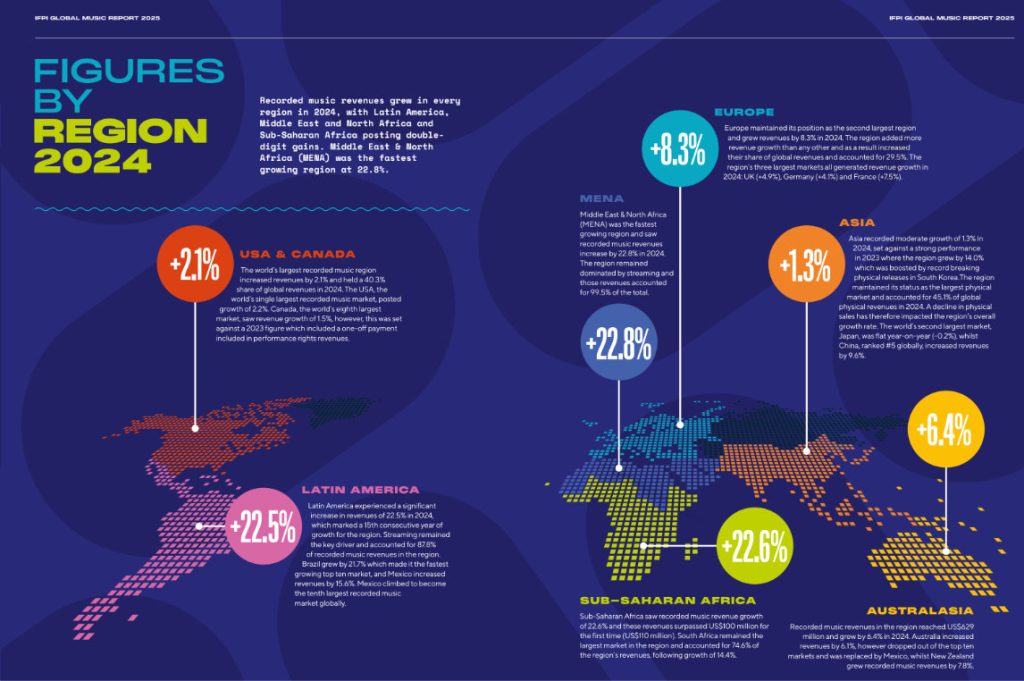
The numbers speak with startling clarity. According to the IFPI’s 2025 report, subscription streaming now commands more than half of recorded music revenue worldwide. Hip hop and R&B claim nearly a quarter of all global on-demand streams. Latin music continues its meteoric rise, while K-pop, once dismissed as niche, has evolved into a global cultural phenomenon. These are not passing waves; they are structural realignments in how music travels, monetises, and persuades.
An old adage behavioural scientists like quoting says, influence thrives on familiarity and social proof. Streaming platforms amplify both. When algorithms cluster songs by “mood” or “theme,” they guide listeners toward predictable emotional journeys. Love, heartbreak, resilience, and celebration dominate, not by coincidence, but because repetition builds comfort. Kenyan R&B’s growth —from 40 million streams in 2020 to nearly a billion by 2024 —illustrates how quickly emotional resonance scales when technology removes borders.
Yet the global picture alone hides the real disruption. Kenya, once marginal in the international recording economy, now stands as a case study in acceleration. Spotify reports a 277% increase in local music consumption in Kenya over the past three years. Arbantone, a genre barely five years old, now dominates the under-18 demographic, seeding cultural codes that will echo for decades. Gengetone commands evening streaming peaks, linking music to daily social gatherings and release rituals. These micro-rhythms reveal how culture becomes embedded in the fabric of time.
The implications extend beyond art. As music trends evolve, they signal where influence, identity, and capital will move next. Consider Afrobeats. Once localised to West Africa, its global surge reshaped marketing campaigns, fashion tie-ins, and diaspora engagement strategies. Arbantone and gengetone are poised to follow similar arcs. Early adoption by international producers and AI-driven platforms can accelerate this trajectory, creating not just hits but entire industries.
Behavioural economists tell us that scarcity and novelty drive attention. Kenyan youth-driven genres deliver both. Arbantone is novel to global listeners, yet scarce in international catalogues. For creators using AI, this imbalance represents opportunity. Train models not only on established hip-hop or pop, but also on emergent Nairobi soundscapes. Doing so positions your output at the intersection of the familiar and the fresh—where virality often begins.
At the same time, the cultural context cannot be ignored. Listeners in Nairobi are not passive consumers; they are cultural co-authors. Sheng lyrics, local percussion, and storytelling rooted in everyday struggles matter. Strip those elements, and the product loses authenticity. From a behavioural science perspective, it is clear authenticity drives trust, and trust sustains adoption. Global audiences crave novelty, but they also crave truth.
The future of music is neither entirely global nor strictly local; it is glocal, to borrow a phrase from sociology. Streaming has created a space where Arbantone can sit beside K-pop, and where R&B in Nairobi can eclipse imported catalogues. Music trends are not only indicators of entertainment; they are also rich data points for identity, aspiration, and power. For AI musicians, producers, and strategists, the challenge is not simply to follow the data but to interpret it, predict its shifts, and infuse authenticity into every generated beat.
In this landscape, Kenya is not a follower. It is a frontier. And in today’s economy, frontiers define the future. Have you tried our AI music from our sister company, Bunifu Sounds? Click the banner below to listen on Spotify. You can also listen on YouTube.
