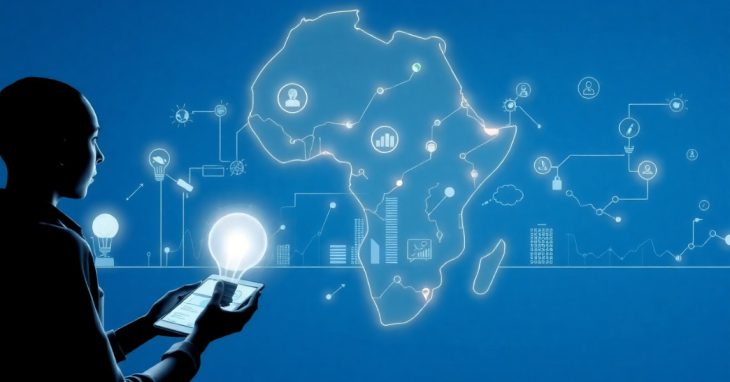
The newly released Global Innovation Index confirms a stubborn pattern. Switzerland tops the list again, for the 15th straight year. Only eight African countries appear in the top 100: Mauritius (53), Morocco (57), Seychelles (75), Tunisia (76), Egypt (86), Botswana (87), Senegal (89), and Namibia (91). Kenya sits narrowly outside those places, at 102.
What does the Global Innovation Index measure, and why is it relevant for Kenyan policymakers? Think of it as two bookends: what enables innovation, and what innovation produces. The first bookend charts inputs such as institutions, education quality, infrastructure, research funding and market depth. The second records outputs such as patents, high-tech exports, scientific papers and creative goods. In plain language, inputs are the soil. Outputs are the harvest. Countries that fertilise the soil consistently rise in the Global Innovation Index.
Kenya’s soil has promise, but it also carries critical flaws. The country invests far less than 1% of its GDP in research and development. Many innovation leaders invest 2% to 4%. Kenyan universities produce valuable research. Too often, they do not convert it into patents, products, or industry partnerships. Manufacturing capacity remains thin. Funding for growth-stage companies — Series B and later — remains scarce. The result: many startups exit early. The ecosystem loses momentum, and the gains remain individual rather than national.
The stories of iHub, Nailab, and M-PESA illustrate this dynamic well. In 2010, iHub opened, giving Nairobi a visible centre for coders, designers and founders. Erik Hersman, an internationally connected technologist, founded it. Nailab followed, co-founded by Tonee Ndungu and Bart Lacroix. These hubs sparked energy, spawned co-working spaces, and trained decades of talent. Yet, headlines that once celebrated constant disruption have dwindled. Why? Because many of the early sparks depended on external impulse — ideas, funding or founders with foreign ties. M-PESA, for instance, emerged from Nick Hughes’s work at Vodafone and launched with Safaricom’s reach. Safaricom made it scale. But the conceptual spark came from outside. When the foreign impulse fades, the local ecosystem struggles to maintain momentum.
This pattern reflects a broader development issue. When foreign NGOs design interventions that rely on external funding, communities struggle to sustain them once donor support ends. Similarly, externally driven innovation solutions lack local ownership, risking collapse when foreign support diminishes. Emphasising local ownership underscores the need for systemic change in Kenya’s innovation ecosystem.
Even innovations that start inside Kenya often stall because entrepreneurs sell early. Selling a promising startup can make founders wealthy quickly. It also removes a potential national champion from the economy. Vusi Thembekwayo’s four-stage framework helps explain why many Kenyan businesses stop short of long-term impact. He ranks motives as transactional, speculative, legacy and philosophy.
Transactional founders launch to survive day-to-day. Speculative founders build to flip for profit. Legacy founders stay long to secure family wealth. Philosophical founders aim to change systems and language. Too many Kenyan enterprises anchor at transactional or speculative stages. They feed families and then exit. They rarely become generational institutions that invest in national capability.
Historical examples make this clear. Paul Kinuthia started Inter-Consumer Products with little capital. He developed the Nice & Lovely brand and later sold the business to L’Oréal for KES 1.5 billion. The sale rewarded him, but it also removed a local manufacturing champion. Contrast that with companies that become national institutions and reinvest profits into local R&D, training, and scale. Those firms anchor talent, create managerial depth, and act as buyers for smaller innovators.
That said, African ingenuity is abundant — but the path to global scale often runs via the diaspora. Consider Joe Kinvi, born in Togo and raised in Ireland, who co-founded Borderless, a platform that powers diaspora investment in Africa. Then there is Jessica Matthews, a Nigerian-American inventor whose clean-energy company, Uncharted Power, created a “Soccket” — a soccer ball that generates electricity when played with — and secured a $7 million Series A. Yonas Beshawred, an Ethiopian-American, founded StackShare, a community for software developers, which raised over $12 million and was later acquired. And Sam Udotong, a Nigerian-American MIT alum, co-founded Fireflies.ai, an AI meeting assistant; the company became a unicorn despite relatively modest fundraising.
These stories highlight a striking dynamic: some of Africa’s most well-funded, high-growth innovation comes not from the continent itself, but from Africans who left early, built their companies abroad, and then took those successes global. Meanwhile, innovators who remain on the continent — like Joseph Nguthiru, whose startup HyaPak turns water hyacinth into biodegradable packaging — still face a steeper climb.
Nguthiru’s company, now valued at about $2.5 million (KES 324 million), urgently needs growth capital, industrial linkages, and strong policy support to scale further. This contrast underscores a painful truth: African talent is world-class. But building major global brands often requires migration — a reality that both enriches the continent’s innovation narrative and raises uncomfortable questions about ownership.
If Kenya aims to climb the Global Innovation Index, policymakers must act on the indicators it values. First, the state should increase R&D spending to at least 1% of GDP and create predictable funding streams for university labs. Second, the government must strengthen intellectual property protection and streamline commercialisation pathways. Third, it must develop local manufacturing and supply chains so ideas can scale from prototype to product. Fourth, the country needs more growth-stage finance and patient capital to discourage premature exits. Fifth, it should incentivise local champions—firms that can survive fifty years and invest back into the national ecosystem.
Business culture matters too. When founders and investors prize quick exits over legacy building, the economy cycles through constant startup births without producing durable institutions. When founders hold on and reinvest, ecosystems deepen. Developed economies did not become innovation leaders merely by producing many companies. They built a set of long-lived firms with R&D budgets, managerial expertise, and a habit of reinvesting profits for future growth. That habit matters on the Global Innovation Index.
The narrative we tell the country also matters. Leaders must celebrate long-term builders, not just the exit value of startups. They must reward risk-taking and serendipitous failure. They must fund universities to privilege applied research. They must anchor innovation in problems that Kenyans feel personally. When the inventor also feels the pinch, they persevere. They iterate in ways foreign authors rarely imagine.
Kenya can do this. The country already hosts energetic youth, vibrant digital adoption, creative entrepreneurs and a strong civic appetite for reinvention. The government’s vision to transform Kenya into a first-world country holds merit. Delivering it requires aligning policy with the Global Innovation Index’s variables: institutions, human capital, infrastructure, market depth, and business sophistication. Turned into action, those variables will convert flashes of brilliance into long-lived industries.
Innovation will never be a single event. It will become a system built over the years. Kenya must own that system. Then the Global Innovation Index will reflect the transformation, and the nation will keep the pride of ideas truly made within its borders.