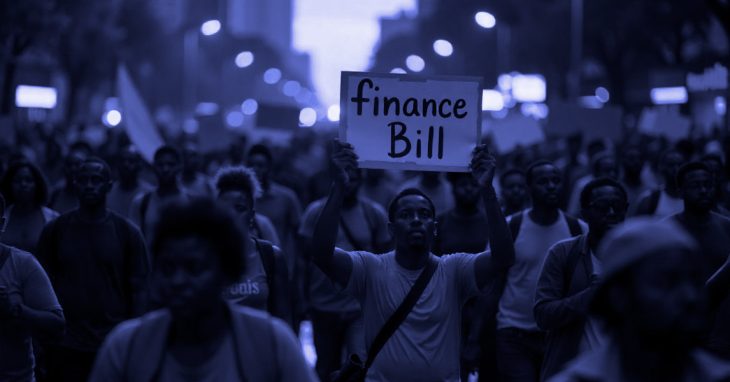
I’ve spent my life building systems that scale—algorithms, architectures, interfaces. However, nothing I’ve coded comes close to the complexity and volatility of what I witnessed during the 2024 Kenyan Gen Z protests. The pace, spontaneity, and logic-defying momentum reminded me of other flashpoints I’ve tracked closely: the American hippie movement in the 1960s, the rise of Anonymous in the mid-2000s, the Egyptian uprising in 2011, and most recently, Sri Lanka’s massive civic revolt in 2022. Movements that started with a tweet, a breadline, a meme, or a rock concert and ended with governments falling or societies transformed. I’ve come to believe that digital and cultural movements are among the most powerful political tools of our age—but their success hinges on a delicate balance between chaos and coherence.
Woodstock to Washington: The Hippie Movement and the Power of Culture
In the United States, the 1960s countercultural movement—often caricatured as tie-dyed hedonism—had a profound political edge. Born out of disillusionment with conformity and war, the hippie movement championed peace, civil rights, environmentalism, and psychedelic exploration.
Over 600,000 marched against the Vietnam War in Washington, D.C., in 1970 alone. The movement fed into the civil rights era, the rise of the feminist and gay rights movements, and ultimately reshaped American politics and culture.
It succeeded where others stumbled because it fused lifestyle with activism, art with ideology. But even it fragmented—commercialised by pop culture, diluted by generational fatigue. It showed that cultural soft power could shift societies—but without political coherence, it couldn’t hold the gains.
From Lulz to Liberation: How 4chan Accidentally Built a Cyber Army
Anonymous wasn’t meant to change the world. It was born for the lulz. But when the Church of Scientology tried to erase a leaked Tom Cruise video from the internet in 2008, the hive mind snapped to attention. What followed—DDoS attacks, real-world protests in Guy Fawkes masks, viral videos—is now internet lore.
At its zenith during the Arab Spring, Anonymous helped Tunisians bypass state censorship and provided tools to activists. It supported Occupy Wall Street and battled ISIS online. In 2011–2012 alone, the group appeared in over 3.5 million online mentions (LexisNexis). But without leadership or ideological coherence, the group splintered. It was easy to join and even easier to impersonate. Without institutional scaffolding, Anonymous faded, becoming a cautionary tale of digital entropy.
Tahrir Square: A Revolution Engineered on Facebook
Egypt, 2011. A Facebook page called “We Are All Khaled Said” was the spark. Khaled, a young man brutally murdered by police, became a symbol. Within weeks, millions of Egyptians—fuelled by decades of repression and now emboldened by digital solidarity—took to the streets. Tahrir Square was filled with chants, tents, and hashtags.
Social media did more than organise; it globalised the revolution. Tweets translated into dozens of languages reached activists in Tunisia, Libya, and beyond. In just 18 days, President Hosni Mubarak, who had ruled for 30 years, stepped down.
But the revolution faltered when street energy failed to convert into democratic infrastructure. Egypt returned to military rule. The code for rebellion ran perfectly, but the install for governance failed.
Sri Lanka: A People’s Movement That Toppled a Dynasty
In 2022, Sri Lankans, devastated by economic collapse, took to the streets. What started as scattered protests against fuel shortages morphed into a national uprising. Using WhatsApp groups and TikTok videos, young people coordinated mass demonstrations that culminated in the storming of President Gotabaya Rajapaksa’s residence.
In scenes that echoed the Arab Spring, protestors occupied parliament buildings and bathed in presidential swimming pools. But unlike Egypt, the Sri Lankan movement had one clear, united goal: to remove the Rajapaksa dynasty. It succeeded. The president fled. Parliament, pressured by the street, appointed a transitional government.
Why did it work?
- Unified demand: No ambiguity—Rajapaksa had to go.
- Multi-class participation: This wasn’t just limited to students and activists—it included mothers, monks, and mechanics.
- Offline and online synergy: Social media spread the message, but traditional civil society carried it forward.
Kenya’s Gen Z: The Beta Version of a Civic Reboot
Then came Kenya in 2024. The Finance Bill proposed new taxes on essential goods and digital transactions, sparking widespread outrage. But it wasn’t political parties or trade unions that led the charge—it was Gen Z.
TikTokers explained clauses of the bill in Sheng. Twitter Spaces became nightly think tanks. Protest posters were made with Canva, funded through M-Pesa.
#RejectFinanceBill2024 trended with 28 million impressions in a week (GeoPoll). Thousands marched peacefully in Nairobi, Mombasa, and Kisumu. The government blinked. Amendments were made.
But the movement ended as it began: decentralised, brilliant—and structurally hollow.
Six Movements, Six Lessons
From America’s hippies to Anonymous’s online rebellion, Egypt’s Arab Spring, Sri Lanka’s uprising, and Kenya’s Gen Z digital push, six truths emerge:
- Narrative matters: All told, simple, galvanising stories. A martyr. A bankrupt nation. A corrupt war. A tax revolt. A censored video.
- Digital and cultural virality aren’t enough; they generate momentum but not the necessary mechanisms.
- Civic muscle wins: Sri Lanka and the U.S. hippie movement succeeded through mass, sustained mobilisation.
- Movements must evolve: Protests need exit strategies, legal scaffolds, and leadership pipelines.
- Leaderlessness is a double-edged sword: Anonymous has shown us the power without accountability; Kenya risks repeating the same mistake.
- Infrastructure is key: Revolutions need not just passion but institutions.
The Blueprint for Durable Change
As someone who architects scalable systems, I see clear design principles for resilient civic movements:
- Have a Unified Goal: Revolutions need version control. One demand. One fix.
- Design for Longevity: Establish Transition Teams. Legal arms. Training hubs.
- Build Hybrid Platforms: Utilise WhatsApp for alerts, while also partnering with unions, churches, and local media outlets.
- Code for Inclusion: Offline Engagement Is Not Optional—Rural Communities, Elders, and the Digitally Excluded Must Be on Board.
- Cultural Integration: Use art, music, and storytelling not just to mobilise—but to unify and sustain belief.
So, Was Kenya’s Protest a Success?
Yes, if success is defined as mass mobilisation, global attention, and partial policy reversal. But it stops there. No party, platform, or policy pipeline followed. No, if success is defined as building power that lasts beyond a hashtag. Still, Kenya’s protest was not a failure—it was a first draft—a civic prototype.
From Timeline to Timeline of History
Digital movements begin with a notification, but succeed when they become embedded in a nation’s political DNA. The hippies showed us the cultural bridge. Anonymous gave us the architecture of online resistance. Egypt showed us the fire. Sri Lanka showed us the finish. Kenya may yet show us the framework.
We’re living in a time when memes can start revolutions. But until movements develop the muscle to govern, they will continue to burn bright—and burn out.
The question for Kenya’s Gen Z now isn’t whether they can trend again. It’s whether they can build.
The next post could be the next constitution. But only if someone’s writing the code behind it.